

Pet care with Dr. Bronner's
Pet grooming with Dr. Bronner's (not just dogs!)
If you haven't yet seen Lisa Bronner's video on how to wash your dog with Dr. Bronner's soaps, then we recommend you do so. Dr. Bronner's soaps are excellent for cleaning dogs and are absolutely safe! But can Dr. Bronner's soap be used to clean other pets and animals? The answer is YES! Keep reading for some important information.
Flea treatment

First, a general word about flea treatment on any animal. Dr. Bronner's soaps kill fleas, but only when they come into contact with them while wet. Once the animal's skin, fur, and feathers dry, the soap will have no effect on the fleas. Furthermore, the soap does not kill flea eggs, so the best approach when your pet has fleas is to bathe them frequently in order to kill newly hatched fleas. Be sure to also wash your pet's bedding and linens frequently with Dr. Bronner's soap – use 1/3 cup of liquid soap in the washing machine and add 1/2 cup of vinegar to the rinse cycle.
Bathing cats with Dr. Bronner's

Some of you may be wondering if cats need baths – after all, they're known for their meticulous grooming habits and their violent aversion to getting wet. The reality is that some breeds require regular baths, while others may have a medical condition or simply have been in contact with something sticky.
As a general rule, bathe your cat about once a month, with extra washes if it is particularly dirty.
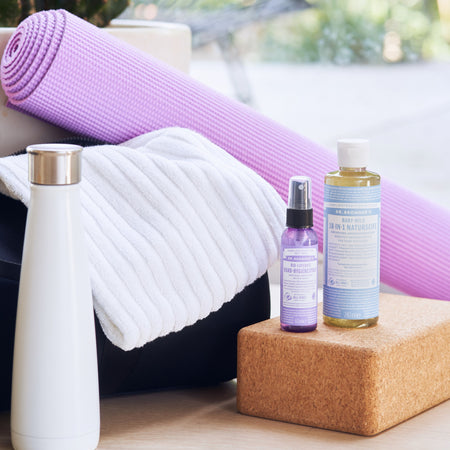
The main thing to keep in mind when bathing your cat is that essential oils are potentially toxic to cats . These include eucalyptus oil, tea tree oil, lemon, and orange oil. In fact, these oils generally only present a problem when they are undiluted and come into contact with a cat's skin – and the concentration of essential oils in Dr. Bronner's soaps is around 1%–2%, which is not enough to cause problems for a pet. However, we recommend, for safety reasons, using only our Organic Baby-Soft Liquid Soaps to bathe your cat.
Okay, you have your soap ready. Now, the most important thing is to prepare properly so that the bathing experience is as comfortable as possible for you and your cat. Here are some tips:
- Trim your cat's claws before bathing.
- Brush your cat before bathing it (knots are harder to untangle when wet).
- Play with the cat a little to tire him out before the bath.
- Close the bathroom door.
- Add some room temperature water to the bathtub.
- Place some towels in the bathtub and on the bathroom floor.
- Wear clothing with long sleeves or a hood to protect yourself from scratches.
Remember that your cat can sense your anxiety and stress – so try to make the experience as relaxing as possible for you, and hopefully your cat will calm down too! It can also be very helpful to have another person on hand to assist you… so invite a friend or loved one over to help.
Bird bath with Dr. Bronner's

Most of the time, it's best to let the birds bathe themselves; simply place a small container with room temperature water and let the bird bathe on its own. You can also spray the bird with a little water. However, if the bird ends up covered in oil or a sticky substance, then a soapy bath is necessary. Similar to bathing cats, the more comfortable and stable the experience is for the bird, the better the result.
We recommend that you fill a small basin with water and then add a squirt or two of soap. Use your hands (or bath gloves for a little extra protection) and gently rub the soapy water onto your bird, avoiding its eyes and beak. Use a spray bottle or mister to rinse the bird and let it air dry.
Other animals? Yes!
Our soaps are quite safe for any animal. We receive photos from our customers washing their chickens, goats, and pigs with Dr. Bronner's – and animal sanctuaries regularly use our soaps to wash horses, llamas, and cows. For any animal, remember to make things as comfortable as possible and keep the soap away from the eyes and nose. The "no tears" characteristic is one that can only be achieved with synthetic detergents and is not something we can do, given the all-natural formulation of our soaps.
Coconut oil for dogs
Before we delve into this topic, we have three important warnings. First, there haven't been many studies on treating pets with coconut oil. The studies that have been done are quite limited in scope, so more research is needed to obtain conclusive evidence on the benefits of coconut oil for pets. Second, you should always consult your veterinarian when considering treatments for your pet. Your veterinarian has a lot of experience and can give you their opinion on treatments that tend to produce the best results. Third, make sure your dog isn't allergic to coconut oil. If you put coconut oil on your dog's skin and things get worse, that's a sign your dog may be allergic.
That being said, we believe our organic coconut oil can bring benefits to dogs when used externally. Yes, some people also choose to feed their dogs and cats small amounts of coconut oil (emphasis on small!), based on claims that it can help with everything from weight loss to cognition. We simply haven't seen enough research to support the effectiveness of this practice – there's no evidence of harm, but also not enough research has been done to show benefits.
But given the proven moisturizing and antimicrobial properties of coconut oil, we feel confident in saying that it can help keep your dog's coat hydrated, help heal mange and other skin irritations, and help prevent or heal cracked paws and nose. As your veterinarian will surely tell you, nutrition plays an important role in maintaining the health of your dog's skin and coat, but coconut oil can provide topical assistance when problems arise.
To apply coconut oil topically, simply rub a very small amount in your hands and then gently pat it onto your dog's coat. Run your fingers through the fur and massage the oil into the skin, paying special attention to problem areas. Your dog will love the special care and massage!
No animal cruelty
Dr. Bronner's products are not only great for caring for pets, but you can also rest easy knowing they are completely cruelty-free. Our products are certified with the Leaping Bunny logo, indicating that our products and ingredients are never tested on animals.


Leave a comment